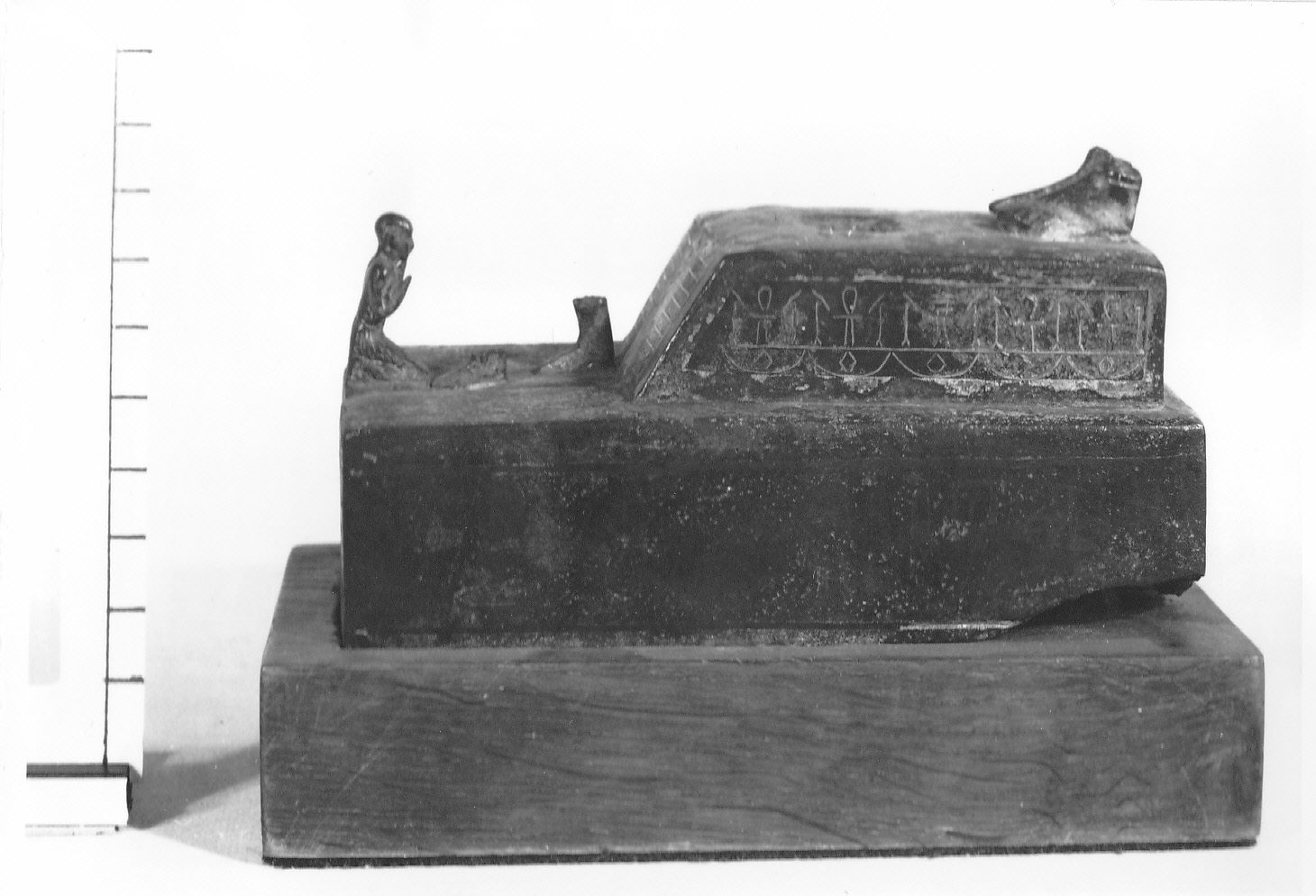
Base of a group of statuettes, probably representing the triad Isis–Osiris–Horus along with an adorant. The figure on the back preserves only the feet, with the toes indicated and anklets inlaid in gold, suggesting it was probably a female figure. In front of the feet of this female figure is a rectangular recess for another statuette, of which only the tenon appears to be preserved. These two figures are positioned on a base shaped in the form of the hieroglyph mAa (Gardiner Aa11), with all sides decorated with inlays: the front side has two ramps of steps inlaid with gold; the right and left sides feature a repeating module composed of an ankh sign flanked by two was hieroglyphs, placed above a nb hieroglyph (Gardiner V30), with a djed replacing the ankh in the central module. On the rear are two confronting scorpions, with inscriptions above them. The panels containing the signs are separate pieces, as are the two staircases on the front side, made of rectangular metal elements inlaid with gold details, inserted into the recesses prepared in the base. The upper base rests on a rectangular base. In front of the upper base, a group of two other figures has been inserted: a kneeling man in an attitude of adoration, and the feet of a walking deity with the left leg advanced. The adorant has a shaven head and his arms are raised in adoration. He wears a shendyt kilt with a belt. The adorant is kneeling on the heels. Flanking the group are two columns of hieroglyphs. The base is inscribed on three sides, with the frame and signs inlaid in a dark, almost black metallic material; on the front side, the sclerae of the wedjat eyes are inlaid in electrum, and the nefer sign is detailed with gold inlay. Inside the base, traces of a very pale brown material, ceramic in appearance with a fine, uniform grain, are preserved, particularly along the sides and rear, perhaps identifiable as plaster used to fix the object to a support. The object is made in the lost-wax technique, and is composed of several elements: the base was cast hollow; the rear figure may be joined to the base, while only the tenon of the front figure appears to remain, suggesting it was probably cast separately. The adorant and the feet of the deity in front of him appear to form a single piece, slid into the front recess, although they may also consist of two separate pieces, as a slight depression is visible between them. The human figures were likely solid cast.